Nasal washing for young children
Nasal irrigation in young children: yes or no?
Dr. Alexandra Semjonova, PhD, responds
Pediatric Unit, Bonvicini Group, Bolzano
Surgeon specializing in pediatrics, Scientific Board of the Italian Society for Perinatal Care (AICIP), Editorial Board of the Italian Journal of Perinatal Care
One of the biggest problems in childhood is upper respiratory tract infections, which also cause nasal obstruction. Excess mucus limits the child's "physiological" nasal breathing and forces them to breathe through their mouth, "non-physiological breathing," causing them great discomfort. Since children breathe exclusively through their nose until at least one year of age, it goes without saying that it is very important to keep it clean and efficient. This means that in the event of a cold or even slight obstruction, the child may have difficulty breathing, especially during sleep and feeding, when they "either breathe or eat," and may also appear nervous and prone to crying.
How can young children be protected from infectious agents?
Your body defends itself against external agents, both infectious and polluting, by increasing nasal mucus production, also known as nasal congestion. However, if this is excessive, it causes a blocked nose.

A child's sleep can be disturbed by a blocked nose.
Remember that air reaches the lungs through the nose, once it has been humidified, warmed, and purified of bacteria and viruses. It is therefore a real filter that prepares the inhaled air for oxygenation of the blood. For this reason, nasal breathing should be encouraged.
Furthermore , it is important to note that children are unable to blow their own noses until at least three years of age, so nasal washing is very important. In addition, a blocked nose predisposes children to other illnesses, such as ear infections and sinusitis.
-
- The ear is prone to infection in children aged 0 to 6 years, as the Eustachian tube is shorter, narrower, and more horizontal. This means that excess mucus in the choanae (the cavities that connect the nostrils to the mouth) can easily enter the ear, bringing bacteria and viruses with it.
- A child with a blocked nose will have difficulty falling asleep, will sleep restlessly, wake up frequently, and may even experience sleep apnea.
- Mouth breathing can alter the physiological development of the mouth (malocclusion, underdevelopment of the lower jaw), resulting in the need for dental treatment. Mouth breathing promotes recurrent infections of the lower respiratory tract (bronchiolitis, bronchitis, pneumonia), often requiring antibiotic treatment.
By performing correct and regular nasal washing using a dynamic, ready-to-use system, it is possible to clear not only the nose, but also the middle ear and paranasal sinuses.
How to perform nasal irrigation on newborns?
In this video, you can see up close how to perform a nasal wash with a syringe and dispenseron newborns.
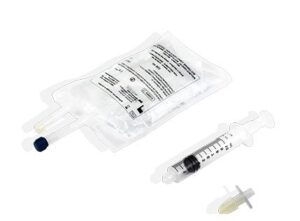
Nasir BabyKitfor nasal washing: solution bag, syringe, and dispenser nozzle
In summary, keeping a small child's nose clean with nasal irrigation means:
- promote the reduction of cold symptoms
- facilitate and remove excess mucus and phlegm
- promote sleep, daytime and nighttime rest
- promotethe elimination of pathogens and allergens
- promote physiological breathing through the nose to achieve future normocclusion, i.e., well-aligned teeth
- facilitating feeding –nutrition
- cleaning the nasal mucosa of dust and bacteria
- moisturize the nasal mucosa
Nasal irrigation is a safe treatment as it is not dangerous and has no side effects. In infants, it should be done mainly before rest and meals, to make sucking less difficult and thus promote feeding.
Would you like to learn more about the product you can use to help little ones breathe better?
Here's how to do nasal irrigation for young children!
Read also:
-
Nasal irrigation: the experts have their say.
-
Stuffy nose: the best natural remedies for nasal congestion
-
Nasal irrigation in preschool children (scientific study)